How To Identify Real Honey
Honey is one of the world’s most valued natural foods, but choosing an authentic product is not always as simple as picking the most attractive jar. Supermarket shelves and online stores offer countless varieties with different origins, colors, textures, prices, and marketing claims. This leaves many consumers wondering how to identify real honey and distinguish trustworthy products from misleading or low-quality alternatives.
The most important point is that there is no single reliable home trick that can prove whether honey is genuine. Real honey naturally varies according to floral source, geographical origin, season, moisture, storage conditions, and processing. Tests involving water, flames, spoons, thumbs, or crystallization are frequently presented online as definitive solutions, but they cannot reliably establish authenticity.
Instead, consumers should focus on traceability, labeling, origin, supplier credibility, natural variation, and, when certainty is required, professional laboratory analysis.
This guide explains how to identify real honey using eight practical indicators that actually matter.
What Does Real Honey Mean?
Before examining authenticity, it is important to understand what honey actually is.
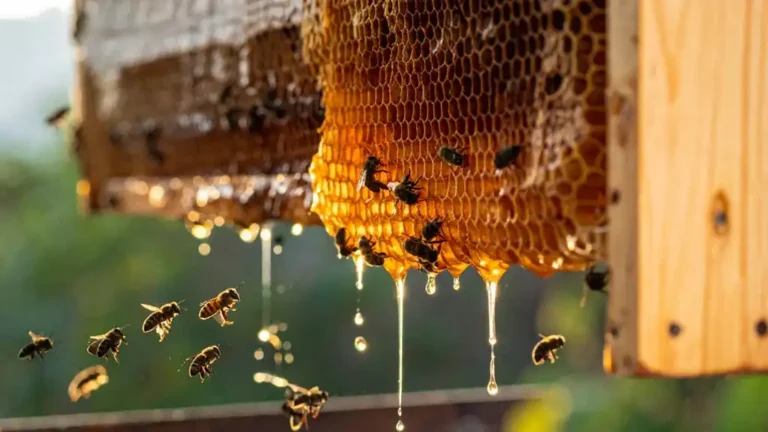
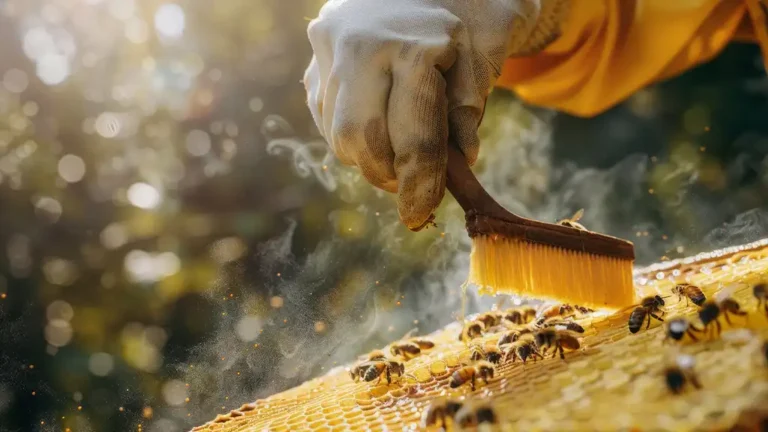
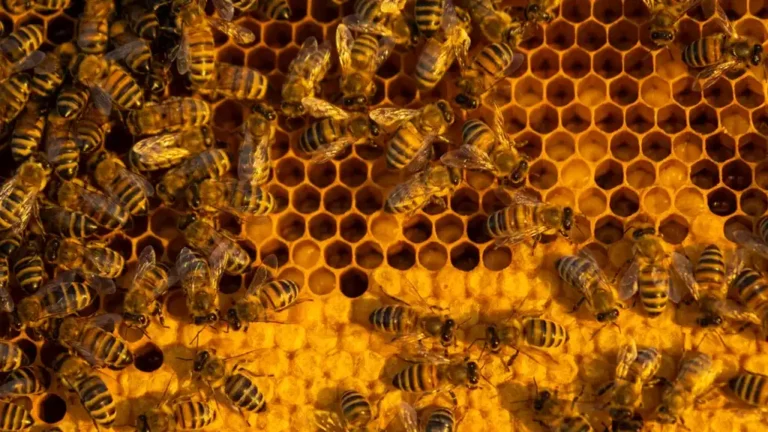
Honey is produced when bees collect nectar or other appropriate plant-derived sources, transform the collected material, deposit it in honeycombs, and allow it to mature.
Authentic honey can naturally differ enormously.
One variety may be pale and almost transparent, while another may be dark amber. Some honeys remain liquid for long periods, while others crystallize relatively quickly. One can taste delicate and floral, while another can be intense, herbal, woody, or slightly bitter.
These differences mean appearance alone cannot determine authenticity.
Understanding this natural diversity is the first step when learning how to identify real honey.
8 Proven Ways To Understand How To Identify Real Honey
1. Check The Label Carefully
The first step is also one of the simplest: read the label.
Do not judge honey exclusively by branding, photographs, or words such as “natural,” “premium,” or “traditional.” Instead, look for concrete product information.
A trustworthy product should provide appropriate information such as:
• Product name
• Country or geographical origin where applicable
• Net quantity
• Producer, packer, or responsible business information
• Best-before information
• Storage instructions where relevant
• Batch or traceability information where required
The exact labeling requirements depend on the market in which the honey is sold, but transparency is always valuable.
If a brand makes impressive claims while providing very little concrete information about the actual product, that should encourage closer examination.
Professional labeling does not prove authenticity by itself, but poor transparency is a reason to be cautious.
2. Look For A Clear Origin
Origin matters enormously when evaluating premium honey.
Honey is directly connected to geography because bees forage within a particular environment. Local vegetation, flowering periods, climate, altitude, and weather conditions all influence the final product.
When determining how to identify real honey, ask a simple question:
Where exactly does this honey come from?
A clearly identified origin provides substantially more information than vague marketing language.
For example, a product identified as honey from Bosnia and Herzegovina gives consumers a geographical reference that can be connected with its producer, floral environment, and supply chain.
Traceability becomes especially important for premium honey because authentic origin is part of the product’s value.
3. Buy From A Trusted Producer Or Supplier
A trustworthy supply chain is one of the strongest practical indicators available to ordinary consumers.
When purchasing directly from a beekeeper, established producer, specialty retailer, or transparent honey brand, buyers have a better opportunity to understand where the product came from.
Look for suppliers that clearly communicate:
• Who they are
• Where their honey originates
• Which varieties they offer
• How products are packaged
• How customers can contact them
• What information is available about production and sourcing
Be cautious when a seller provides almost no traceable business information.
Authenticity is easier to evaluate when there is a clearly identifiable business behind the jar.
4. Understand Natural Crystallization
Crystallization is one of the most misunderstood characteristics of honey.
Many consumers believe crystallized honey must be fake. Others believe the opposite and claim that any honey that crystallizes must automatically be genuine.
Neither conclusion is reliable.
Real honey can crystallize naturally because of its sugar composition. However, the speed and structure of crystallization depend on numerous factors, including floral source, glucose-to-fructose balance, temperature, moisture, and storage.
Some authentic honeys crystallize relatively quickly.
Others may remain liquid for much longer.
Therefore, when learning how to identify real honey, crystallization should be understood as a normal possible characteristic rather than a definitive authenticity test.
5. Expect Natural Differences In Color And Flavor
Real honey is not one standardized product.
Its color can range from extremely light yellow to deep amber and darker brown tones.
Flavor can also differ significantly.
Depending on botanical source, honey may taste:
• Mild
• Floral
• Fruity
• Herbal
• Rich
• Woody
• Strong
• Slightly bitter
A premium wildflower honey should not necessarily taste identical to acacia or forest honey.
Natural differences between varieties and harvests are expected.
If you regularly buy honey from a transparent producer, small variations between harvests can reflect changes in flowering conditions and seasonal environments.
Uniformity alone should never be used as proof of authenticity.
6. Be Skeptical Of Viral Home Tests
This is one of the most important lessons for anyone researching how to identify real honey.
The internet contains numerous supposed authenticity tests.
You may be told to:
• Drop honey into water
• Put it on your thumb
• Burn a honey-covered match
• Place it on paper
• Observe whether ants approach it
• Refrigerate it
• Measure how quickly it flows from a spoon
These methods may appear convincing in short videos, but they cannot reliably establish whether honey is authentic.
Honey’s physical behavior depends on moisture, temperature, floral source, composition, crystallization, and storage.
A thick honey is not automatically genuine.
A runny honey is not automatically adulterated.
A honey that dissolves differently in water has not suddenly provided a complete chemical analysis of itself.
If authenticity genuinely matters, rely on traceability and professional analysis rather than viral experiments.
7. Compare Price With Product Claims
Price alone cannot prove authenticity, but unrealistic pricing deserves attention.
Producing honey requires healthy colonies, suitable forage, beekeeper labor, equipment, harvesting, processing, packaging, quality management, transportation, and retail distribution.
Imported premium honey may also involve logistics and additional commercial costs.
Therefore, an unusually cheap product making exceptional premium-origin claims deserves closer inspection.
This does not mean expensive honey is automatically authentic.
A high price can also simply reflect branding, packaging, or retail margins.
Price should therefore be treated as one piece of information rather than a definitive test.
The key question is whether the price makes sense when considered together with origin, supplier reputation, packaging, and product transparency.
8. Laboratory Testing Provides The Strongest Evidence
When definitive authenticity verification is required, professional analysis is far more meaningful than home experiments.
Laboratories can examine honey using specialized analytical methods designed to evaluate composition, quality parameters, botanical characteristics, and potential adulteration.
The specific testing required depends on what needs to be verified.
For commercial importers, distributors, producers, and other professional buyers, laboratory documentation can therefore be an important part of quality assurance.
Consumers usually will not send every jar they purchase to a laboratory, which is why trusted sourcing and traceability remain so important for everyday purchases.
But when someone asks how to identify real honey with the highest degree of certainty, professional testing is the appropriate direction.
Why The Water Test Does Not Prove Honey Is Real
One of the most popular internet claims says genuine honey should remain together when dropped into water while fake honey should dissolve immediately.
This is an oversimplification.
The behavior of honey in water can be affected by viscosity, moisture, temperature, composition, and other physical characteristics.
Different genuine honeys can therefore behave differently.
The test may show how a particular honey interacts with water under particular conditions, but it does not establish whether the product has been adulterated.
Using this test as definitive proof can lead consumers to reject genuine honey or incorrectly trust an adulterated product.
Why The Thumb Test Is Unreliable
Another common claim says genuine honey should remain on your thumb while fake honey spreads.
Again, viscosity is being mistaken for authenticity.
Honey becomes more fluid when warm and thicker when cool. Different varieties also naturally have different consistencies.
A honey with higher moisture content may behave differently from a thicker variety without necessarily being fake.
The thumb test therefore cannot replace proper product information or analytical testing.
Can You Identify Real Honey By Taste?
Taste can provide useful information about quality and personal preference, but it cannot independently prove authenticity.
Experienced honey professionals may recognize characteristics associated with particular floral sources, but taste alone cannot reliably detect every form of adulteration.
What taste can reveal is complexity.
Premium honey may contain floral, herbal, fruity, woody, or other distinctive sensory notes depending on its botanical origin.
This makes tasting valuable for comparing honey varieties, but it should not be treated as a laboratory test.
Can Real Honey Crystallize?
Yes.
Authentic honey can crystallize, and many varieties naturally do.
Crystallization occurs when glucose begins forming crystals within the honey. The process can be influenced by natural composition, temperature, and other conditions.
The important point is that both liquid and crystallized honey can be authentic.
Therefore, crystallization is neither definitive proof of genuine honey nor evidence that something is wrong.
Consumers who understand this are less likely to discard perfectly good honey simply because its texture changes.
Does Real Honey Have To Be Thick?
No.
This is another common misconception.
Honey viscosity varies according to temperature, moisture content, floral source, and composition.
A cold jar can appear substantially thicker than the same honey in a warm environment.
Some authentic varieties may naturally flow more easily than others.
Judging authenticity purely by thickness is therefore unreliable.
When researching how to identify real honey, focus on evidence that actually relates to sourcing and product identity rather than isolated physical characteristics.
Why Traceability Matters More Than Appearance
A beautiful golden color can be appealing, but it tells you very little about supply-chain transparency.
Traceability is much more valuable.
Ideally, professional honey suppliers should be able to connect products with relevant information about their origin and production.
For commercial buyers, traceability becomes even more important because repeated orders require reliable documentation and consistent supply.
Retailers and distributors need confidence that the product they advertise corresponds with the product they receive.
This is why serious honey brands invest in documentation rather than relying exclusively on attractive marketing.
Understanding Honey Varieties
Knowing the major types of honey can also help consumers make better decisions.
Wildflower Honey
Wildflower honey can contain nectar collected from numerous flowering plants.
Its characteristics can vary considerably depending on region and season, making natural variation an important part of its identity.
Acacia Honey
Acacia honey is often associated with a lighter appearance and delicate flavor profile. Depending on its composition, it may remain liquid for relatively long periods.
Forest Honey
Forest-related honey varieties can have darker colors and stronger flavor characteristics than many light blossom honeys.
Mountain Honey
Mountain environments can provide diverse flowering plants and herbs, producing honey with complex regional characteristics.
None of these categories is automatically “better” than another.
Quality depends on the individual product, production practices, storage, origin, and consumer preferences.
Why Country Of Origin Matters
Honey carries characteristics of the environment in which bees forage.
This makes geographical origin especially relevant.
A clearly communicated country of origin helps consumers connect a product with a real landscape and production region.
It can also provide valuable differentiation for premium honey.
European countries with forests, mountains, wildflower meadows, and established beekeeping traditions can produce highly distinctive products.
Bosnia and Herzegovina is one example.
Its varied landscapes and rich vegetation provide an interesting environment for different honey varieties.
Bosnian Honey And Authentic Origin
Bosnia and Herzegovina has a long connection with beekeeping and offers diverse natural environments, including mountains, forests, valleys, and flowering meadows.
These landscapes provide bees with access to numerous botanical sources.
For consumers seeking premium European honey, Bosnian origin therefore provides a recognizable geographical identity.
However, the same principle applies here as everywhere else: country of origin should not be used as automatic proof that every individual product is excellent.
A serious supplier must still provide consistent quality, transparent information, professional packaging, and reliable sourcing.
Origin creates potential. Professional production turns that potential into a premium product.
How To Choose Honey Online
Online shopping removes the opportunity to inspect a jar physically before purchase, making transparency even more important.
Before ordering, examine the product page carefully.
Look for:
• Clear photographs
• Country of origin
• Product description
• Honey variety
• Package size
• Supplier information
• Contact details
• Shipping information
Avoid relying entirely on dramatic marketing claims.
A professional product page should answer basic questions without forcing customers to guess what they are buying.
How Businesses Should Evaluate Honey Suppliers
Retailers, hotels, restaurants, importers, and distributors require a more systematic approach than individual consumers.
Before entering a commercial relationship, buyers should investigate:
• Product origin
• Available honey varieties
• Quality documentation
• Packaging formats
• Supply capacity
• Labeling
• Export readiness
• Communication reliability
• Long-term supply planning
Samples can also be valuable before committing to larger orders.
Professional buyers should never base sourcing decisions on a home authenticity test.
Commercial procurement requires commercial evidence.
Why Packaging Cannot Prove Authenticity
Premium packaging can communicate quality, but packaging itself cannot prove what is inside the jar.
A beautiful label can be placed on both excellent and poor-quality products.
Consumers should therefore distinguish between presentation and evidence.
Good packaging is still important because it protects the product, communicates required information, and supports brand positioning.
But it should complement transparency rather than replace it.
The strongest premium honey products combine attractive presentation with credible origin and reliable product information.
BeeJapa And Transparent Bosnian Origin
BeeJapa focuses on bringing premium Bosnian honey and bee-based products to international markets with an emphasis on origin, quality consistency, professional presentation, and export-ready cooperation.
Rather than relying solely on generic premium claims, Bosnian origin provides a clear geographical identity behind the products.
For international consumers and professional buyers learning how to identify real honey, this type of transparent sourcing is important because it gives the product context beyond appearance and branding.
For commercial partners, professional cooperation can also involve product selection, packaging formats, documentation, and supply planning according to market requirements.
Real Honey Should Not Need Unrealistic Claims
Honey is already an exceptional natural food.
There is no reason to weaken its credibility with unsupported promises.
Authentic honey offers:
• Distinctive flavor
• Natural variation
• Botanical diversity
• Regional identity
• Culinary versatility
• A direct connection with beekeeping
These qualities provide substantial value without claiming that honey can diagnose, prevent, or cure diseases.
Responsible brands should communicate what their products genuinely offer.
That approach builds stronger long-term consumer confidence.
A Practical Checklist Before Buying Honey
Before placing a jar in your shopping basket, ask yourself several simple questions.
Is the origin clearly stated?
Can I identify the producer or responsible supplier?
Does the label provide meaningful product information?
Is the honey variety explained?
Are the marketing claims reasonable?
Does the price make sense for the product being offered?
Is the seller transparent and easy to contact?
If the product performs well across these areas, you have substantially more useful information than any spoon, water, flame, or thumb experiment can provide.
Conclusion
Understanding how to identify real honey requires abandoning the idea that one simple home test can provide a definitive answer.
Real honey naturally varies in color, flavor, viscosity, crystallization, and aroma. These characteristics are influenced by botanical source, geography, temperature, season, storage, and natural composition.
The strongest practical indicators are transparent labeling, identifiable origin, trustworthy suppliers, realistic product claims, and traceability. When definitive verification is required, professional laboratory testing provides far stronger evidence than viral home tests.
Consumers should therefore evaluate the entire product rather than focusing on one physical characteristic.
Learning how to identify real honey ultimately means learning how to recognize transparency. A credible product should have a clear identity, a traceable origin, and a supplier prepared to stand behind what is inside every jar.
FAQ
How to identify real honey at home?
There is no single home test that can definitively prove honey authenticity. Checking origin, labeling, supplier credibility, traceability, and product information is more reliable than popular water, flame, or thumb tests.
Does real honey crystallize?
Yes. Many genuine honeys crystallize naturally. The speed depends on floral source, sugar composition, temperature, moisture, and storage conditions.
Does real honey dissolve in water?
Real honey can dissolve in water. How quickly it disperses depends on factors such as viscosity, temperature, and composition, so the water test cannot reliably determine authenticity.
Is thick honey always real honey?
No. Thickness depends on temperature, moisture, floral source, and composition. Both genuine and adulterated products can have different viscosities.
Can taste prove whether honey is authentic?
Taste can help evaluate flavor and quality, but it cannot definitively prove authenticity or detect every form of adulteration.
What is the most reliable way to verify honey authenticity?
When definitive verification is necessary, appropriate professional laboratory analysis provides much stronger evidence than home tests.
Why is honey origin important?
Origin provides information about the geographical environment where bees foraged and improves product traceability. It is particularly valuable when combined with a trustworthy producer and transparent supply chain.
What should I check before buying premium honey?
Check the country of origin, producer or supplier, honey variety, labeling, traceability information, packaging, and whether marketing claims are credible.