Honey Wholesale Suppliers
Honey wholesale suppliers play an essential role in connecting beekeepers, honey producers, exporters, distributors, retailers, and food manufacturers across international markets. For businesses purchasing honey in commercial quantities, selecting the right supplier is a decision that directly influences product quality, operational reliability, customer satisfaction, and long-term profitability.
The global honey market includes products from numerous geographical regions, each offering different botanical varieties, flavor profiles, colors, textures, and production characteristics. Buyers can source honey for supermarket distribution, specialty retail, food manufacturing, hospitality, private labeling, and international trade.
However, wholesale purchasing involves more than comparing prices per kilogram. Honey is a natural agricultural product, and its characteristics depend on geographical origin, flowering vegetation, harvesting conditions, processing, storage, and transportation. Reliable sourcing therefore requires careful evaluation of product authenticity, documentation, available quantities, packaging, and supplier capabilities.
For international businesses interested in premium European honey, Bosnia and Herzegovina offers a distinctive geographical origin. Its mountains, forests, meadows, and varied flowering vegetation create opportunities for different honey varieties, supported by an established tradition of beekeeping.
This guide explores six key factors for choosing reliable wholesale honey suppliers, explains how bulk honey purchasing works, and examines opportunities for businesses seeking premium honey for international distribution.
1. Honey Wholesale Suppliers Must Provide Consistent Product Quality
Product quality is the foundation of successful wholesale honey sourcing.
Businesses purchasing honey in commercial quantities need products that meet agreed specifications and customer expectations. Whether honey is intended for retail jars, industrial food production, or premium hospitality applications, quality should be evaluated before confirming an order.
Honey quality involves several characteristics, including authenticity, composition, moisture content, sensory properties, and appropriate handling.
Important honey quality parameters
Wholesale buyers should consider:
- Product authenticity and composition
- Geographical origin
- Botanical variety
- Moisture content
- Color and appearance
- Flavor and aroma
- Processing methods
- Storage conditions
- Batch identification
- Relevant laboratory documentation
The exact specifications depend on the intended application and destination market.
For example, a food manufacturer may require particular technical characteristics, while a premium retailer may place greater emphasis on flavor, botanical origin, and product presentation.
Why authenticity matters in wholesale trade
Honey adulteration is an important concern in international supply chains.
Products containing undeclared sugar syrups or other substances may not meet legal definitions of honey.
For commercial buyers, authenticity problems can create financial losses, regulatory complications, and damage to brand reputation.
Reliable suppliers should be able to explain their sourcing arrangements and provide appropriate supporting information.
Depending on the transaction, laboratory analysis and supply-chain verification may be necessary.
Popular household authenticity tests involving water, flames, or paper are not reliable methods for determining whether honey is genuine.
Evaluating samples before purchasing
Representative samples allow buyers to assess honey before committing to larger quantities.
Samples can help evaluate:
- Flavor
- Aroma
- Color
- Texture
- General appearance
- Suitability for the intended application
However, sensory evaluation alone cannot establish authenticity or compliance with technical specifications.
Commercial buyers may need additional documentation or testing.
Maintaining quality across orders
Honey naturally varies between harvests.
The objective is not necessarily to make every batch completely identical.
Instead, buyers and suppliers should agree on specifications and acceptable variations.
These may include botanical identity, moisture limits, sensory characteristics, and other relevant parameters.
Key takeaway: Consistent wholesale quality depends on clear specifications, authentic sourcing, appropriate verification, and transparent supplier communication.
2. Choose Suppliers With Transparent Geographical Origin
Geographical origin is one of the most important characteristics of honey.
Honey reflects the natural environment in which bees collect nectar or other permitted plant-derived materials.
Different regions offer different botanical sources, climates, landscapes, and seasonal conditions.
These factors influence the final product’s flavor, aroma, color, composition, and crystallization behavior.
Why origin matters for wholesale buyers
Geographical origin can influence both product quality expectations and commercial positioning.
Retailers may use origin to differentiate products.
Food manufacturers may select honey based on particular characteristics.
Premium brands may emphasize a recognizable geographical identity.
Wholesale buyers should therefore request clear information about:
- Country of origin
- Sourcing region
- Botanical source where identifiable
- Harvest period
- Producer or sourcing arrangements
- Batch traceability
- Relevant origin documentation
Accurate information is especially important when products are marketed as originating from a specific country.
European honey suppliers
Europe contains diverse honey-producing environments.
Depending on geographical location, European honey may include varieties associated with acacia, linden, wildflowers, forests, chestnut, and mountain vegetation.
This diversity creates opportunities for wholesale buyers seeking different product characteristics.
European honey can also support premium positioning in international markets where geographical identity is commercially valuable.
However, European origin alone does not guarantee superior quality.
Individual products and suppliers must still be evaluated.
Honey from Bosnia and Herzegovina
Bosnia and Herzegovina offers an interesting sourcing origin for premium honey.
The country’s varied landscapes include mountains, forests, valleys, rivers, and meadows.
These environments provide different flowering conditions depending on region and season.
Bosnia and Herzegovina also has an established tradition of beekeeping.
For businesses seeking distinctive European honey, Bosnian origin can provide an identifiable geographical story.
Why traceability is essential
Traceability helps buyers understand the movement of honey through the supply chain.
It can support product verification, quality management, and regulatory compliance.
A supplier should be able to explain how origin information is maintained and connected to the relevant product batches.
Key takeaway: Transparent geographical origin strengthens product credibility and supports differentiated commercial positioning.
3. Evaluate Wholesale Quantities and Supply Reliability
A supplier may offer excellent honey but still be unsuitable for a business requiring regular commercial deliveries.
Supply capacity is therefore a critical factor.
Honey production depends on natural conditions, and harvest volumes can change between seasons.
Weather, flowering periods, bee activity, and environmental factors all influence production.
Wholesale buyers should understand these limitations before making long-term commitments.
Questions about available quantities
Important questions include:
- What quantities are currently available?
- What is the minimum order quantity?
- Which honey varieties are available?
- Can the supplier fulfill repeat orders?
- What are the expected lead times?
- How does availability change seasonally?
- Can the supplier support larger future orders?
- What happens if a harvest is smaller than expected?
Clear answers help businesses plan purchasing and distribution.
Minimum order quantities
Minimum order quantity, or MOQ, refers to the smallest commercial quantity a supplier is willing to sell under a particular arrangement.
MOQ may depend on:
- Honey variety
- Packaging format
- Order destination
- Customization requirements
- Supplier inventory
- Production and handling costs
A supplier offering bulk containers may have different minimum quantities from one supplying finished retail jars.
Seasonal honey availability
Honey production is not identical to continuous industrial manufacturing.
Certain botanical varieties may be available in larger quantities during favorable seasons.
Other years may produce smaller harvests.
This is particularly important for buyers seeking specific floral varieties.
A reliable supplier should communicate realistic availability rather than promising unlimited quantities.
Planning repeat orders
Businesses expecting regular purchases should share estimated demand with suppliers.
For example, a distributor planning quarterly orders can provide approximate annual volume expectations.
This information may help the supplier evaluate sourcing requirements and future availability.
However, forecasts should not be confused with guaranteed production quantities.
Managing supply disruptions
Wholesale buyers should consider potential disruptions, including:
- Poor harvest conditions
- Transportation delays
- Packaging shortages
- Documentation issues
- Changes in import requirements
- Unexpected demand
Clear contractual arrangements and realistic planning can reduce operational risks.
Key takeaway: Reliable supply requires realistic quantity planning, seasonal awareness, and transparent communication about availability.
4. Compare Packaging and Wholesale Honey Formats
Packaging affects transportation, storage, handling, product presentation, and overall commercial costs.
Different buyers require different formats.
A food manufacturer may prefer bulk containers.
A supermarket distributor may need finished consumer jars.
A hospitality business may require smaller portions or specialized packaging.
Wholesale suppliers should clearly explain which formats they offer.
Bulk honey packaging
Bulk honey is commonly purchased for manufacturing, repacking, or further distribution.
Depending on the supplier and product, packaging may include:
- Food-grade drums
- Larger commercial containers
- Food-grade buckets
- Intermediate bulk containers where suitable
- Other approved bulk packaging
The chosen format should be appropriate for honey and the intended transportation conditions.
Retail-ready honey packaging
Some wholesale suppliers offer honey in finished consumer packaging.
Possible formats include:
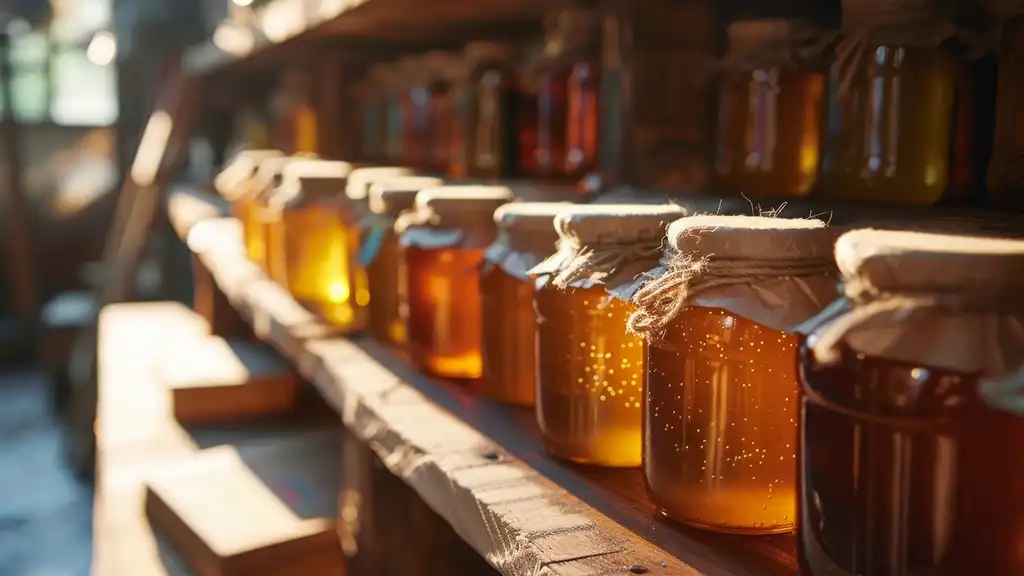
- Small glass jars
- Medium retail jars
- Larger family-sized containers
- Food-grade plastic packaging
- Premium gift jars
- Specialty presentation packaging
Availability varies between suppliers.
Glass versus plastic packaging
Glass is frequently associated with premium honey presentation.
It allows consumers to see the product and can support an attractive retail appearance.
However, glass is heavier and more fragile than many plastic alternatives.
Food-grade plastic may reduce weight and breakage concerns.
The appropriate material depends on product positioning, food-contact suitability, transportation, and customer preferences.
Private label packaging
Some wholesale honey suppliers also offer private-label services.
This allows businesses to sell honey under their own brand.
Depending on supplier capabilities, customization may include labels, packaging sizes, and presentation materials.
However, not every wholesaler provides private-label production.
Buyers should verify actual capabilities before planning a branded product launch.
Packaging for international shipments
Export packaging must protect honey during handling and transportation.
Important considerations include:
- Container integrity
- Food-contact suitability
- Leak prevention
- Breakage protection
- Carton strength
- Pallet stability
- Appropriate storage conditions
Packaging requirements should be discussed before finalizing commercial orders.
Key takeaway: The best packaging format depends on the buyer’s intended application, transportation requirements, and commercial strategy.
5. Verify Export Documentation and Regulatory Compliance
International honey trade involves food safety, customs, documentation, and labeling requirements.
These obligations vary depending on the country of origin, destination market, and product format.
Wholesale buyers should confirm requirements before arranging shipments.
A reliable supplier should communicate clearly about the documents and product information it can provide.
Common commercial documents
Depending on the shipment, relevant documentation may include:
- Commercial invoice
- Packing list
- Certificate of origin where required
- Product specifications
- Relevant sanitary or health documentation
- Laboratory reports where required
- Transport documents
- Applicable certification records
The exact requirements must be verified for the destination market.
Food safety considerations
Honey should be produced, handled, stored, and transported according to applicable food safety requirements.
Commercial buyers may need to evaluate:
- Product specifications
- Traceability
- Moisture content
- Relevant contaminants and residues
- Packaging suitability
- Storage conditions
- Supplier quality procedures
The appropriate verification process depends on the product and regulatory environment.
Organic honey documentation
Organic honey must comply with applicable organic production and certification requirements.
A product being natural, raw, or sourced from a forest does not automatically make it certified organic.
Wholesale buyers should verify certification before marketing honey as organic.
Labeling requirements
Retail honey labels may need to include information such as:
- Product name
- Country of origin
- Net quantity
- Responsible business information
- Batch identification
- Date marking
- Required language information
- Other mandatory declarations
Requirements vary between countries.
A label compliant in one market may not be suitable for another.
Avoiding unsupported health claims
Honey is sometimes marketed with exaggerated statements about immunity, digestion, or disease treatment.
Commercial buyers should avoid unsupported medical claims.
Honey is primarily a sugar-rich food, although it contains smaller quantities of naturally occurring compounds.
Marketing should focus on genuine product characteristics and comply with applicable regulations.
Key takeaway: Documentation and regulatory compliance must be confirmed before commercial shipment, not after the products reach the destination.
6. Compare Pricing, Logistics, and Long-Term Supplier Reliability
Wholesale honey purchasing should be evaluated through total commercial value rather than price alone.
A lower initial price may not represent the best offer if product quality, documentation, packaging, or delivery reliability is inadequate.
Businesses should compare suppliers using equivalent specifications and clearly defined commercial terms.
What influences wholesale honey prices?
Prices may depend on:
- Geographical origin
- Botanical variety
- Product specifications
- Harvest availability
- Order quantity
- Packaging
- Processing requirements
- Certification
- Transportation
- Market conditions
A premium single-origin honey may have a different price structure from a large-volume blended product.
Understanding landed cost
Landed cost represents the total expense of bringing products to the intended destination.
Depending on the transaction, it may include:
- Honey purchase price
- Packaging
- Freight
- Insurance
- Customs charges
- Import duties
- Applicable taxes
- Handling
- Warehousing
- Local transportation
Comparing only the price per kilogram can produce misleading conclusions.
International shipping terms
Commercial buyers should understand the agreed shipping responsibilities.
International trade commonly uses Incoterms to define certain obligations relating to delivery, risk, and costs.
The appropriate terms depend on the transaction.
Buyers should clarify which party is responsible for transportation, insurance arrangements, export procedures, and import clearance.
Evaluating long-term reliability
A dependable supplier should communicate accurately and fulfill agreed responsibilities.
Important characteristics include:
- Transparent product information
- Realistic delivery timelines
- Clear commercial terms
- Appropriate documentation
- Consistent specifications
- Professional communication
- Responsiveness to quality concerns
Long-term cooperation can improve purchasing efficiency and reduce uncertainty.
Why the cheapest supplier is not always the best
Low prices can be attractive, particularly for high-volume purchases.
However, unreliable supply can create additional costs.
Delayed shipments may affect retail availability.
Incorrect documentation can cause customs complications.
Inconsistent product quality may result in customer complaints.
The complete commercial relationship should therefore be considered.
Key takeaway: The strongest wholesale offer combines competitive total cost, suitable quality, dependable logistics, and reliable long-term cooperation.
What Do Honey Wholesale Suppliers Do?
Honey wholesale suppliers connect production and sourcing operations with businesses purchasing commercial quantities.
Their activities may include sourcing honey, managing inventory, preparing packaging, coordinating documentation, and arranging commercial shipments.
However, the exact services vary.
Some suppliers work directly with beekeepers.
Others purchase honey from producers or established supply networks.
Some specialize in bulk honey, while others focus on retail-ready products.
Certain companies also provide export coordination or private-label services.
Buyers should verify which services are actually available rather than assuming every wholesaler offers the same capabilities.
Honey Wholesalers vs Honey Producers
A honey producer is directly involved in beekeeping and honey production.
A wholesaler purchases or sources honey for commercial resale.
Some businesses perform both functions.
Others work with independent producers or sourcing partners.
Neither model is automatically superior.
The important factors are authenticity, traceability, quality, commercial reliability, and compliance with applicable requirements.
A supplier should explain its role accurately.
Honey Wholesale Suppliers vs Honey Exporters
Wholesalers and exporters can perform overlapping activities.
A wholesaler primarily supplies commercial quantities.
An exporter focuses on cross-border transactions and related requirements.
Some companies operate as both wholesale suppliers and exporters.
Others serve only domestic markets.
For international buyers, it is important to confirm whether a supplier can support the intended export arrangement.
This may involve documentation, packaging, shipping coordination, and compliance with destination-market requirements.
Who Buys Honey in Wholesale Quantities?
Wholesale honey serves a wide range of businesses.
Common buyers include:
- Supermarkets
- Specialty food retailers
- Importers
- Distributors
- Food manufacturers
- Bakeries
- Hotels
- Restaurants
- Online retailers
- Private-label brands
- Corporate gifting businesses
Each category has different requirements.
A manufacturer may prioritize technical specifications and bulk packaging.
A premium retailer may focus on botanical origin, flavor, and presentation.
A distributor may require predictable supply and competitive landed costs.
Understanding these differences helps buyers select suitable suppliers.
Bulk Honey for Food Manufacturers
Food manufacturers use honey in various applications.
These may include bakery products, sauces, cereals, confectionery, beverages, and other foods.
Manufacturers often require specific product characteristics.
Important considerations can include:
- Consistent specifications
- Suitable viscosity
- Moisture content
- Flavor profile
- Packaging format
- Batch traceability
- Supply continuity
The appropriate honey depends on the intended recipe and production process.
Manufacturers should evaluate representative samples and technical specifications before committing to larger quantities.
Wholesale Honey for Supermarkets
Supermarkets require products that meet consumer expectations and operational requirements.
Retail-ready honey should have suitable packaging, accurate labels, and reliable availability.
Some retailers prefer established brands.
Others develop private-label products.
Premium honey can be positioned according to botanical origin, geographical identity, flavor, and packaging.
However, product claims should remain accurate.
Retailers may also impose additional commercial requirements relating to barcodes, packaging, insurance, audits, or delivery procedures.
These should be confirmed during supplier negotiations.
Wholesale Honey for Specialty Food Stores
Specialty retailers often focus on differentiated products.
Honey from recognizable geographical origins can support this positioning.
For example, a retailer may offer several varieties with distinct flavor profiles.
Premium European honey can complement other regional products.
Bosnian honey may appeal to businesses seeking a less commonly promoted European origin.
However, the product’s value should be communicated through genuine characteristics rather than unsupported claims.
Wholesale Honey for Hotels and Restaurants
Hospitality businesses may use honey in breakfast service, beverages, desserts, sauces, and premium food presentation.
Hotels may prefer individual portions or retail-style jars.
Restaurants may require larger containers suitable for kitchen operations.
Premium establishments may also seek distinctive botanical varieties.
For these businesses, flavor consistency, packaging convenience, and reliable delivery can be particularly important.
Wholesale Honey for Online Retailers
Online retailers can develop honey collections based on geographical origin, botanical variety, and product presentation.
However, e-commerce creates additional packaging and distribution requirements.
Glass jars need suitable protection during parcel transportation.
Product descriptions should provide clear information about origin, variety, net quantity, and storage.
Retailers should avoid unsupported medical claims and misleading authenticity promises.
Accurate product photography and descriptions help customers understand what they are purchasing.
Wholesale Honey for Private Label Brands
Private labeling allows businesses to sell honey under their own brand.
This can be attractive for retailers, distributors, and online companies seeking differentiated products.
However, private-label projects require coordination.
Important considerations include:
- Honey sourcing
- Product specifications
- Packaging
- Label design
- Minimum quantities
- Regulatory compliance
- Production timelines
- Shipping arrangements
Not every wholesale supplier provides these services.
Businesses should confirm customization capabilities before making commitments.
European Honey Wholesale Suppliers
Europe offers a wide range of honey-producing environments.
Different climates, landscapes, and flowering plants contribute to diverse honey characteristics.
Wholesale buyers may find varieties associated with acacia, wildflowers, linden, forests, chestnut, and other botanical sources.
European origin can support premium positioning in international markets.
However, it should not be treated as an automatic guarantee of authenticity or quality.
Buyers should evaluate individual products, suppliers, and documentation.
Wholesale Honey From Bosnia and Herzegovina
Bosnia and Herzegovina offers an interesting geographical origin for international honey buyers.
The country’s landscapes include mountains, forests, valleys, rivers, and meadows.
These environments provide different flowering conditions throughout the year.
Bosnia and Herzegovina also has an established beekeeping tradition.
For wholesale buyers, Bosnian honey can offer distinctive European geographical identity and opportunities for product differentiation.
Why consider Bosnian honey?
Potential advantages include:
- Recognizable European origin
- Diverse botanical environments
- Established beekeeping traditions
- Different honey varieties
- Distinctive flavor profiles
- Premium retail positioning
However, buyers should verify actual product availability, specifications, and supplier capabilities.
Origin alone does not establish superior quality.
Acacia Honey Wholesale
Acacia honey is appreciated for its mild flavor and relatively slow crystallization.
Its lighter appearance can appeal to consumers seeking delicate floral honey.
For wholesale buyers, acacia honey may be suitable for premium retail and other applications.
However, commercial specifications should clearly identify the product.
Botanical origin claims should be accurate and appropriately supported.
Wildflower Honey Wholesale
Wildflower honey generally reflects nectar collected from multiple flowering plants.
Its characteristics depend on region, season, and botanical composition.
This creates opportunities for products with distinctive geographical identities.
However, variation between harvests should be considered when establishing commercial specifications.
Wholesale buyers should understand the acceptable range of color, flavor, and other characteristics.
Forest Honey Wholesale
Forest honey may include honeydew honey, which differs from typical floral nectar honey.
Depending on its source, it can have distinctive flavor and composition.
Some forest honeys are darker and more aromatic than lighter floral varieties.
However, the category is not completely uniform.
Buyers should request accurate product information rather than assuming all forest honey has identical characteristics.
Mountain Honey Wholesale
Mountain honey is often marketed through geographical identity.
However, the term does not necessarily identify one botanical variety.
Honey produced in mountainous environments may reflect several flowering plants.
Its characteristics depend on local vegetation and seasonal conditions.
Wholesale buyers should clarify the precise meaning of the product description.
This is particularly important when using geographical claims in premium marketing.
Raw Honey Wholesale Suppliers
Raw honey is commonly associated with relatively limited processing after extraction.
However, the term may be interpreted differently across markets.
Buyers should ask suppliers about extraction, heating, filtration, and packaging methods.
Raw honey is not automatically organic.
It is also not necessarily superior to every conventionally processed honey in nutritional or sensory quality.
The most important factors remain authenticity, appropriate handling, and suitability for the intended application.
Organic Honey Wholesale Suppliers
Organic honey must meet applicable organic production and certification requirements.
A honey originating from forests, mountains, or other natural environments is not automatically certified organic.
Commercial buyers should verify certification before making organic claims.
Documentation requirements may differ between destination markets.
Importers should confirm whether the relevant certification is recognized in the intended country of sale.
Natural Honey Wholesale
Natural honey is a broad commercial description.
It does not necessarily specify botanical origin, processing method, or organic certification.
Buyers should avoid relying exclusively on the word natural.
Instead, they should request clear product specifications.
These may include geographical origin, botanical identity, handling information, and relevant quality documentation.
Transparent information provides a stronger foundation for commercial purchasing.
How to Buy Honey in Bulk
Bulk purchasing should begin with clearly defined requirements.
The buyer should establish the intended use, quantity, product characteristics, packaging, and destination.
The next step is evaluating suitable suppliers.
Representative samples and documentation may be requested.
Commercial quotations should then be compared using equivalent specifications.
Before confirming an order, both parties should agree on payment terms, shipping responsibilities, delivery timelines, and procedures for handling nonconforming products.
A structured purchasing process reduces misunderstandings.
What Is the Minimum Order Quantity for Wholesale Honey?
MOQ varies between suppliers.
Some may support smaller commercial orders.
Others focus on larger shipments.
Minimum quantities can depend on:
- Product variety
- Packaging
- Destination
- Available inventory
- Customization
- Handling costs
Buyers should request specific MOQ information rather than assuming one standard applies across the industry.
For repeat purchasing, expected annual quantities may also be relevant.
How Much Does Wholesale Honey Cost?
Wholesale honey prices depend on product characteristics and market conditions.
Important factors include geographical origin, botanical variety, harvest availability, packaging, order volume, and quality specifications.
Transportation and import-related expenses also influence the final cost.
There is no universal wholesale price suitable for every product.
A meaningful quotation should identify the honey, quantity, packaging, delivery terms, and applicable commercial conditions.
Buyers should compare total landed costs rather than price per kilogram alone.
How to Request a Wholesale Honey Quotation
A detailed inquiry helps suppliers provide more accurate offers.
Buyers should include:
- Destination country
- Required honey variety
- Estimated quantity
- Preferred packaging
- Intended application
- Quality requirements
- Certification requirements
- Expected delivery period
- Preferred shipping terms, if known
The supplier can then evaluate product availability and commercial feasibility.
Incomplete inquiries may lead to unnecessary communication or quotations that cannot be compared fairly.
Honey Wholesale Suppliers for Qatar
Qatar offers potential opportunities for premium imported honey.
Businesses may source honey for supermarkets, specialty retailers, hospitality, online stores, and distribution.
European honey can provide additional geographical diversity.
For wholesale buyers in Qatar, important considerations include:
- Product origin
- Quality specifications
- Import documentation
- Labeling requirements
- Packaging
- Shipping
- Landed cost
- Supplier reliability
Importers should verify current Qatari requirements before arranging shipments.
These may depend on product classification, packaging, and the specific commercial arrangement.
Honey Wholesale Suppliers in the Middle East
The Middle East includes several established honey markets.
However, requirements and consumer preferences differ between countries.
Qatar, Saudi Arabia, the United Arab Emirates, and other markets have distinct regulatory and commercial environments.
International suppliers should therefore evaluate each destination separately.
Premium European honey may provide additional product variety, but successful distribution depends on appropriate pricing, compliance, and local market knowledge.
Honey Imports and International Logistics
International honey trade involves coordination between suppliers, freight providers, customs authorities, and importers.
Important logistical considerations include packaging integrity, transport conditions, documentation, and delivery responsibilities.
Excessive heat can affect certain honey characteristics over time.
This is particularly relevant for shipments traveling through hot climates.
Buyers should establish suitable storage and handling expectations before transportation.
Honey Crystallization in Wholesale Shipments
Crystallization is a natural process that occurs in many genuine honey varieties.
It depends on sugar composition, botanical origin, temperature, and storage conditions.
Some varieties crystallize relatively quickly.
Others remain liquid longer.
Wholesale buyers should understand the expected crystallization behavior of their products.
Crystallization alone does not indicate spoilage or adulteration.
However, it also does not prove authenticity.
Retailers should communicate natural texture changes accurately to consumers.
Honey Shelf Life and Storage
Honey generally has good storage stability when properly produced, packaged, and stored.
However, product quality can change over time.
Excessive heat may affect aroma, color, and certain chemical characteristics.
Moisture exposure can also create quality concerns.
Wholesale suppliers and buyers should agree on appropriate storage requirements and date-marking information.
Commercial warehouses should follow relevant food safety and handling procedures.
Honey Authenticity and Laboratory Testing
Honey authenticity is an important consideration for international buyers.
Adulteration can create regulatory, financial, and reputational risks.
Professional verification may involve laboratory analysis, supply-chain documentation, and traceability controls.
The appropriate testing approach depends on the product and suspected issue.
No single household test can reliably establish authenticity.
Commercial buyers should evaluate supplier credibility and request appropriate evidence where necessary.
Common Mistakes When Choosing Wholesale Honey Suppliers
Several mistakes can weaken a purchasing strategy.
One is selecting suppliers exclusively on price.
Another is failing to verify product specifications before ordering.
Other common mistakes include:
- Ignoring geographical origin
- Not requesting samples
- Overlooking documentation
- Underestimating freight costs
- Failing to discuss seasonal availability
- Choosing unsuitable packaging
- Assuming all honey varieties behave identically
- Ignoring repeat-order capacity
- Using unsupported product claims
- Not clarifying delivery responsibilities
These risks can often be reduced through structured supplier evaluation.
How to Compare Multiple Honey Suppliers
Buyers should compare suppliers using consistent criteria.
A practical evaluation can consider product quality, origin, documentation, pricing, available quantities, packaging, and delivery capabilities.
Supplier communication is also important.
A company offering a slightly higher price may provide greater commercial value if it offers more reliable service.
However, higher prices do not automatically indicate better quality.
The decision should be based on documented product characteristics and commercial suitability.
Building Long-Term Wholesale Honey Partnerships
Long-term cooperation can improve supply planning and purchasing efficiency.
Buyers benefit from suppliers who understand their product requirements and expected quantities.
Suppliers benefit from clearer demand forecasts.
However, honey production remains dependent on natural conditions.
Both parties should account for seasonal variation.
A successful relationship requires transparent communication, realistic commitments, and agreed procedures for addressing quality or delivery problems.
BeeJapa and Premium Bosnian Honey
BeeJapa focuses on presenting premium Bosnian honey and bee-based products to international markets.
The brand’s identity is connected to Bosnia and Herzegovina, a European country characterized by mountains, forests, meadows, valleys, diverse flowering vegetation, and established beekeeping traditions.
For businesses exploring premium honey sourcing, Bosnian origin can provide a distinctive geographical identity.
Potential commercial applications include specialty retail, wholesale distribution, hospitality, gifting, and other food-related markets.
Businesses interested in cooperation should confirm available products, quantities, packaging formats, documentation, and export arrangements according to their specific requirements.
These capabilities should be verified rather than assumed.
BeeJapa’s premium positioning can emphasize authentic Bosnian origin, product quality, transparent information, and professional presentation.
The Future of International Honey Wholesale
International honey sourcing continues to offer opportunities for product differentiation.
Buyers can explore honey from different geographical regions, botanical environments, and production traditions.
However, successful wholesale purchasing requires more than identifying an attractive origin.
Authenticity, documentation, quality specifications, reliable supply, and commercial efficiency remain essential.
Premium European honey can contribute to differentiated retail assortments.
Bosnia and Herzegovina offers a distinctive geographical identity that may appeal to international buyers seeking additional European sourcing options.
The strongest commercial relationships will be those built on transparent information, realistic commitments, and consistent product standards.
Conclusion
Choosing reliable honey wholesale suppliers requires careful evaluation of product quality, geographical origin, supply capacity, packaging, regulatory compliance, pricing, logistics, and long-term commercial reliability.
The six key factors discussed in this guide provide a practical framework for importers, distributors, retailers, manufacturers, and hospitality businesses.
Quality and authenticity should come first. Transparent origin information can then support product differentiation, while reliable quantities and suitable packaging help maintain operational efficiency.
Documentation and regulatory compliance are essential for international trade.
Pricing should be evaluated through total landed cost rather than the initial price alone.
For businesses interested in premium European honey, Bosnia and Herzegovina offers a distinctive origin associated with diverse landscapes, varied flowering vegetation, and established beekeeping traditions.
BeeJapa presents this Bosnian identity to international markets through premium honey and bee-based products.
Ultimately, the best honey wholesale suppliers are those capable of combining authentic products, transparent sourcing, suitable commercial terms, and dependable long-term cooperation.
FAQ
What do honey wholesale suppliers do?
Honey wholesale suppliers provide commercial quantities of honey to businesses such as retailers, distributors, importers, manufacturers, and hospitality companies. Their services may include sourcing, packaging, documentation, and shipment coordination.
How do I find reliable honey wholesale suppliers?
Evaluate product authenticity, geographical origin, quality specifications, available quantities, packaging, documentation, pricing, and delivery reliability. Request representative samples and verify relevant supplier information before committing to major orders.
Can I buy honey in bulk directly from producers?
Yes. Some producers sell commercial quantities directly, while others work through wholesalers or exporters. The appropriate sourcing model depends on quantity, product requirements, and destination.
What is the minimum order quantity for wholesale honey?
Minimum order quantities vary between suppliers and depend on honey variety, packaging, inventory, and commercial arrangements. Buyers should request specific MOQ information.
Is European honey suitable for wholesale distribution?
Yes. European honey offers diverse botanical varieties and geographical origins. Buyers should evaluate individual product specifications, authenticity, documentation, and supplier reliability.
Why consider Bosnian honey for wholesale purchasing?
Bosnia and Herzegovina offers a distinctive European origin associated with diverse landscapes, flowering vegetation, and established beekeeping traditions. Its geographical identity can support differentiated premium honey products.
Can wholesale honey be imported into Qatar?
Honey can be imported into Qatar subject to applicable food safety, customs, labeling, and documentation requirements. Importers should verify current regulations before arranging shipments.
Do honey wholesale suppliers offer private labeling?
Some suppliers provide private-label packaging and customization, but services vary. Buyers should confirm available options, minimum quantities, and regulatory responsibilities.
How much does wholesale honey cost?
Prices depend on geographical origin, botanical variety, quality specifications, quantity, packaging, and logistics. Buyers should request detailed quotations and compare total landed costs.
Does crystallized honey mean the product is poor quality?
No. Crystallization is a natural process in many genuine honey varieties. It does not automatically indicate spoilage or adulteration, although crystallization alone cannot establish authenticity.