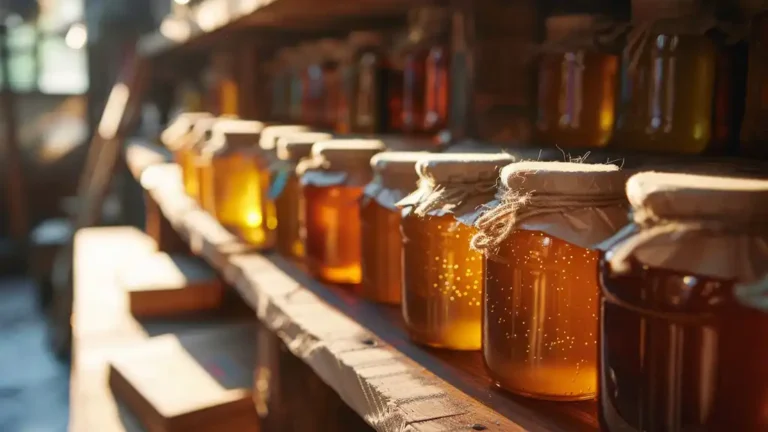
Private Label Honey Supplier
Private label honey supplier selection is one of the most important decisions for businesses planning to launch, expand, or distribute their own honey brand. Whether you operate a specialty food store, supermarket, online business, wholesale distribution company, or premium food brand, working with the right supplier can determine the quality, reliability, and long-term success of your products.
Private label honey allows businesses to market honey under their own brand identity without necessarily owning beehives, extraction facilities, or packaging equipment. Instead, companies can collaborate with producers, exporters, and packaging partners to develop products that match their commercial requirements.
However, creating a successful honey brand involves more than placing a custom label on an existing jar. Product authenticity, geographical origin, botanical varieties, packaging, labeling regulations, minimum order quantities, logistics, and supplier transparency all influence the final result.
International buyers also need to understand how honey production differs from conventional manufacturing. Honey is a natural agricultural product, and its availability, flavor, color, and texture can vary depending on seasonal conditions and botanical sources.
For businesses interested in premium European honey, Bosnia and Herzegovina represents a distinctive sourcing origin. Its mountains, forests, meadows, and varied flowering vegetation contribute to a diverse honey-producing environment.
This guide explores eight essential factors for selecting a private label honey supplier and explains how businesses can build a competitive honey brand for domestic and international markets.
1. Private Label Honey Supplier Selection Starts With Product Quality
Product quality should be the foundation of every private label honey business.
Attractive packaging and effective marketing may encourage customers to try a product, but consistent quality is essential for repeat purchases and long-term brand credibility.
Honey quality depends on several factors, including botanical origin, harvesting practices, moisture content, processing, storage, and authenticity.
A reliable supplier should be able to explain the characteristics of the honey being offered and provide relevant product information.
Important honey quality characteristics
Commercial buyers should evaluate:
- Product authenticity
- Geographical origin
- Botanical variety
- Moisture content
- Flavor and aroma
- Color and texture
- Processing methods
- Storage conditions
- Batch traceability
- Relevant laboratory documentation
Not every characteristic needs to be identical across all honey varieties.
For example, acacia honey and forest honey can have noticeably different colors, flavors, and crystallization patterns.
The objective is to establish clear specifications for each product.
Why authenticity matters
Honey authenticity is especially important for businesses developing premium brands.
Adulteration with undeclared sugar syrups or other substances can damage consumer trust and create regulatory problems.
Buyers should not rely on popular household authenticity tests involving water, flames, or paper.
These methods cannot reliably determine whether honey is genuine.
Professional verification may require appropriate laboratory testing, documentation, and supply-chain controls.
Requesting product samples
Before committing to commercial quantities, buyers should consider evaluating representative samples.
Samples allow businesses to assess:
- Flavor
- Aroma
- Appearance
- Texture
- Packaging suitability
- Overall product presentation
Food manufacturers may also need to test honey in their intended applications.
Key takeaway: Strong private label brands begin with authentic honey, clearly defined specifications, and reliable quality controls.
2. Choose a Supplier With Transparent Geographical Origin
Geographical origin can be a valuable differentiating factor in the premium honey market.
Consumers increasingly encounter honey from different countries, botanical environments, and production traditions.
For private label businesses, a recognizable origin can support product storytelling and brand positioning.
However, geographical claims must be accurate and traceable.
Why honey origin influences the product
Honey reflects the environment in which bees collect nectar.
Different regions provide different flowering plants, climates, and seasonal conditions.
These factors influence the honey’s natural composition and sensory characteristics.
Important influences include:
- Local vegetation
- Flowering periods
- Climate
- Altitude
- Seasonal weather
- Botanical diversity
- Harvesting conditions
Honey produced in one geographical region may therefore differ from honey originating elsewhere.
European honey for private label brands
Europe offers numerous honey-producing regions with distinctive botanical sources.
Depending on the location, buyers may find honey associated with acacia, wildflowers, linden, forests, chestnut, and other vegetation.
For premium food brands, European honey can provide an identifiable geographical foundation.
However, European origin alone does not guarantee superior quality.
Each supplier and product should be evaluated individually.
Bosnia and Herzegovina as a sourcing origin
Bosnia and Herzegovina offers an interesting environment for honey production.
Its mountains, forests, meadows, valleys, and varied flowering vegetation create opportunities for different honey varieties.
The country also has an established tradition of beekeeping.
For businesses seeking a distinctive European origin, Bosnian honey can provide a recognizable identity that differentiates products from generic international blends.
Communicating origin responsibly
Private label brands should avoid unsupported claims.
Descriptions such as “the world’s healthiest honey” or “guaranteed superior purity” require evidence that may not exist.
A stronger approach emphasizes verifiable characteristics:
- Country of origin
- Identified botanical variety
- Authentic geographical identity
- Transparent sourcing
- Accurate product specifications
Key takeaway: Traceable geographical origin can strengthen premium positioning when supported by factual product information.
3. Evaluate Available Honey Varieties and Product Range
A private label honey supplier should offer products that match the intended brand strategy.
Different honey varieties appeal to different consumers.
Some customers prefer mild, delicate flavors.
Others appreciate stronger aromas, darker colors, or distinctive botanical characteristics.
Understanding the available product range helps businesses develop a more coherent assortment.
Acacia honey
Acacia honey is often appreciated for its mild flavor and relatively light appearance.
It commonly remains liquid longer than many other varieties because of its natural sugar composition.
This can make it attractive for consumers who prefer liquid honey.
However, individual batches can still vary.
Wildflower honey
Wildflower honey generally reflects nectar collected from multiple flowering plants.
Its flavor, aroma, and color depend on geographical location and season.
This variety can provide an accessible introduction to the diversity of natural honey.
Linden honey
Linden honey is associated with a distinctive aromatic profile.
It may appeal to consumers who enjoy more recognizable floral characteristics.
The actual sensory profile depends on the individual product.
Forest honey
Forest honey may include honeydew honey, which originates from different source materials than typical floral nectar honey.
Depending on its composition, it can have a darker appearance and more pronounced flavor.
However, not every forest honey has identical characteristics.
Mountain honey
Mountain honey is often marketed through its geographical origin.
Its botanical composition may vary considerably between locations.
A supplier should clarify whether the description refers to a specific floral source, geographical area, or broader product category.
Developing a balanced collection
A private label brand does not necessarily need dozens of products.
A carefully selected assortment may be more effective.
For example, a brand could begin with:
- A mild floral honey
- A distinctive wildflower honey
- A stronger aromatic variety
- A premium geographical-origin product
The final selection should reflect actual supplier availability and customer demand.
Key takeaway: Choose honey varieties according to customer preferences, brand positioning, and reliable sourcing rather than offering an unnecessarily large product range.

4. Understand Packaging and Custom Labeling Options
Packaging plays an important role in private label honey development.
It influences product protection, transportation, shelf presentation, customer perception, and brand identity.
For premium honey, packaging should communicate quality without making the product appear unnecessarily complicated.
Common honey packaging formats
Depending on supplier capabilities, available formats may include:
- Glass jars
- Food-grade plastic containers
- Small individual portions
- Medium-sized retail jars
- Larger family-sized packaging
- Commercial bulk containers
- Gift packaging
- Specialty presentation boxes
Not every supplier offers every format.
Buyers should confirm actual availability before finalizing their brand design.
Glass packaging
Glass jars are common in premium honey retail.
They allow consumers to see the product and can support an attractive presentation.
However, glass is heavier and more fragile than some alternative materials.
International shipping requires suitable protective packaging.
Plastic packaging
Food-grade plastic containers may offer advantages in weight and handling.
However, the selected material must be suitable for food contact and the intended product.
Brand positioning and consumer preferences should also be considered.
Custom honey labels
A professional label should communicate essential product information clearly.
Depending on the destination market, this may include:
- Product name
- Net weight
- Country of origin
- Ingredient information
- Responsible business details
- Batch identification
- Date marking where required
- Storage instructions
- Relevant certification information
Regulatory requirements vary between markets.
A label suitable for one country may require modification before being used elsewhere.
Premium packaging design
Effective premium packaging generally benefits from a consistent visual identity.
Important design elements include typography, color palette, product photography, label proportions, and clear information hierarchy.
A brand should avoid overcrowding labels with excessive claims or decorative elements.
The product’s geographical identity and genuine characteristics can provide a strong foundation for the design.
Key takeaway: Packaging should protect the honey, meet applicable requirements, and communicate a consistent brand identity.
5. Confirm Minimum Order Quantities and Supply Capacity
Minimum order quantity, commonly called MOQ, is an important commercial consideration.
Private label production often requires preparation, packaging, printing, and coordination.
Suppliers may therefore establish minimum quantities for individual products or packaging formats.
However, MOQ varies significantly between companies.
Questions to ask about MOQ
Before selecting a private label honey supplier, buyers should ask:
- What is the minimum order quantity?
- Does MOQ apply per honey variety?
- Does MOQ apply per packaging size?
- Can different products be combined?
- Are custom labels subject to separate minimums?
- What are the expected production timelines?
- Can the supplier support repeat orders?
These questions help businesses determine whether the supplier matches their scale.
Starting with smaller quantities
New brands often prefer smaller initial orders.
This allows them to test customer demand and evaluate product performance.
However, small quantities may result in higher packaging or production costs per unit.
The business should compare these costs with its expected retail pricing.
Planning for business growth
A supplier suitable for a small launch may not necessarily support much larger future