Honey Crystallization
Honey crystallization is a completely natural process that can change the texture and appearance of honey without necessarily affecting its quality, authenticity, or suitability for consumption. Many consumers become concerned when a jar of smooth, liquid honey gradually turns cloudy, thick, grainy, or solid. However, these changes are often a normal result of honey’s natural sugar composition.
Honey is a complex food produced by bees from nectar or other natural plant sources. Although it consists primarily of sugars, it also contains water, organic acids, enzymes, and small quantities of other naturally occurring compounds. The balance of these components influences how honey behaves during storage.
Some varieties remain liquid for extended periods, while others develop crystals relatively quickly. Temperature, botanical origin, glucose concentration, moisture content, and storage conditions all contribute to this process.
Understanding why honey crystallizes can help consumers distinguish normal physical changes from genuine quality concerns. It can also help retailers, distributors, and honey enthusiasts store and handle their products appropriately.
For those interested in premium European honey, including varieties originating from Bosnia and Herzegovina, crystallization is particularly relevant because different floral sources can produce noticeably different textures and crystallization patterns.
This guide explores nine essential facts about honey crystallization, explains the science behind the process, and provides practical advice for storing and gently softening crystallized honey.
1. Honey Crystallization Is a Natural Physical Process
The first important fact is that honey crystallization is a natural phenomenon rather than an automatic indication of spoilage.
Freshly extracted honey is commonly liquid, although its consistency varies depending on botanical origin and temperature. Over time, some of the dissolved sugars may begin forming solid crystals.
This happens because honey contains more sugar than can remain dissolved indefinitely under certain conditions.
Scientists describe this type of mixture as a supersaturated sugar solution.
What happens during crystallization?
Honey contains two major sugars:
- Fructose
- Glucose
Both contribute to sweetness, but they behave differently in water.
Fructose is generally more soluble, while glucose has a greater tendency to form crystals.
As glucose separates from the liquid phase, tiny solid structures begin developing.
These structures can grow and spread throughout the honey.
The result may be a thick, creamy, grainy, or nearly solid texture.
Does crystallization change honey into another substance?
No.
The honey remains honey.
Crystallization primarily changes the physical arrangement of some of its sugars.
It does not automatically indicate fermentation, contamination, or adulteration.
A properly stored jar can crystallize naturally while remaining suitable for consumption.
Key takeaway: Crystallization is usually a normal physical transformation, not evidence that honey has gone bad.
2. Glucose and Fructose Determine How Quickly Honey Crystallizes
The second essential fact is that the natural balance of glucose and fructose strongly influences crystallization.
Although both sugars are present in honey, their relative proportions vary between botanical varieties.
Honey with a relatively high glucose concentration often crystallizes more readily.
Honey with a higher fructose-to-glucose ratio may remain liquid longer.
Why glucose forms crystals
Glucose is less soluble in water than fructose.
When the conditions favor crystallization, glucose molecules begin organizing into solid structures.
These structures may gradually increase in size.
The remaining liquid portion becomes relatively richer in fructose.
This is why crystallized honey can contain both solid and liquid phases.
Honey varieties behave differently
Different floral sources can produce different sugar profiles.
For example:
- Some rapeseed honeys crystallize relatively quickly.
- Many acacia honeys remain liquid for longer periods.
- Wildflower honey varies according to its nectar composition.
- Certain forest honeys may behave differently from floral honeys.
These are general tendencies rather than guarantees.
Actual behavior depends on the composition of each batch.
Is fast crystallization a sign of poor quality?
No.
Rapid crystallization can occur in perfectly genuine, properly handled honey.
Likewise, slow crystallization does not automatically indicate superior quality.
The process is primarily connected to natural composition and environmental conditions.
Key takeaway: The glucose-to-fructose balance is one of the strongest natural influences on crystallization speed.
3. Storage Temperature Has a Major Influence
Temperature is another important factor in determining how honey changes during storage.
Many consumers assume that colder conditions always preserve honey in its original liquid form.
However, this is not necessarily true.
Crystallization often develops relatively quickly at moderately cool temperatures, particularly around 10–15°C, although the precise behavior depends on the honey.
Why temperature matters
Temperature influences several processes simultaneously:
- Sugar solubility
- Molecular movement
- Crystal formation
- Crystal growth
- Honey viscosity
At lower temperatures, honey becomes thicker.
At higher temperatures, sugar solubility generally increases.
However, temperature also affects how easily molecules move and organize.
The combined result is that crystallization does not simply increase or decrease in a perfectly linear relationship with temperature.
Should honey be refrigerated?
Ordinary shelf-stable honey generally does not require refrigeration.
Refrigeration may encourage or alter crystallization, depending on the honey and storage conditions.
It can also make honey considerably thicker and more difficult to pour.
For most household applications, storing honey in a suitable, dry location away from excessive heat and direct sunlight is more practical.
Always follow the manufacturer’s storage instructions.
What about hot climates?
In countries such as Qatar and other Gulf markets, high ambient temperatures introduce different storage considerations.
Prolonged exposure to excessive heat can affect honey quality over time.
Heat may alter aroma, color, and certain heat-sensitive components.
Consumers should therefore avoid leaving honey in direct sunlight, hot vehicles, or other excessively warm locations.
Key takeaway: Stable, appropriate storage conditions are more important than trying to keep honey permanently liquid.
4. Different Honey Varieties Develop Different Crystal Textures
Not all crystallized honey looks or feels the same.
Some varieties develop fine, smooth crystals.
Others form larger, more noticeable grains.
Certain honeys become creamy, while others develop a firm or uneven texture.
These differences depend on both composition and crystallization conditions.
Fine versus coarse crystals
Fine crystals are small and may create a smooth, spreadable consistency.
Coarse crystals are larger and can produce a grainier mouthfeel.
Crystal size is influenced by factors such as:
- Initial crystal formation
- Temperature
- Sugar composition
- Storage conditions
- The presence of crystallization nuclei
- Subsequent crystal growth
The appearance alone does not determine quality.
Why some honey becomes creamy
Creamed honey is a familiar product in several markets.
Its smooth consistency is often created through controlled crystallization.
Instead of allowing large crystals to develop unpredictably, producers encourage the formation of numerous small crystals.
This produces a more uniform, spreadable texture.
Creamed honey is not necessarily mixed with dairy cream.
The name refers to its consistency.
Is grainy honey safe?
A grainy texture can be completely normal.
However, consumers should evaluate the product as a whole.
Unusual fermentation odors, bubbling, leakage, or other signs of deterioration deserve attention.
Crystallization and spoilage are different phenomena.
Key takeaway: Crystal size affects texture, but fine or coarse crystals do not automatically indicate good or bad honey.
5. Crystallization Does Not Prove That Honey Is Authentic
One of the most common misconceptions is that genuine honey must crystallize.
Another is that honey remaining liquid must be fake.
Neither claim is scientifically reliable.
Authentic honey can crystallize rapidly, slowly, or remain liquid for extended periods.
The result depends on botanical origin, sugar composition, processing, and storage conditions.
Can fake honey crystallize?
Certain adulterated sugar mixtures can also develop crystals under appropriate conditions.
Therefore, crystallization cannot establish whether a product has been adulterated.
Can genuine honey stay liquid?
Yes.
Some authentic varieties naturally remain liquid longer than others.
Acacia honey is a familiar example of a variety that often crystallizes relatively slowly.
This does not make it less genuine.
Why home authenticity tests are unreliable
Popular internet tests claim that real honey can be identified by observing how it behaves in water, on paper, or when heated.
These methods are not dependable.
Honey varies naturally in viscosity, moisture, density, and sugar composition.
Such differences can influence the outcome of household experiments.
Reliable authenticity assessment may require:
- Traceable sourcing information
- Appropriate product documentation
- Supplier verification
- Relevant laboratory testing
- Supply-chain controls
No single home test can reliably replace these measures.
Key takeaway: Crystallization is a natural characteristic of many honeys, not a definitive authenticity test.
6. Crystallized Honey Can Usually Be Gently Softened
Consumers who prefer liquid honey often want to reverse crystallization.
Fortunately, glucose crystals can dissolve when conditions become suitable.
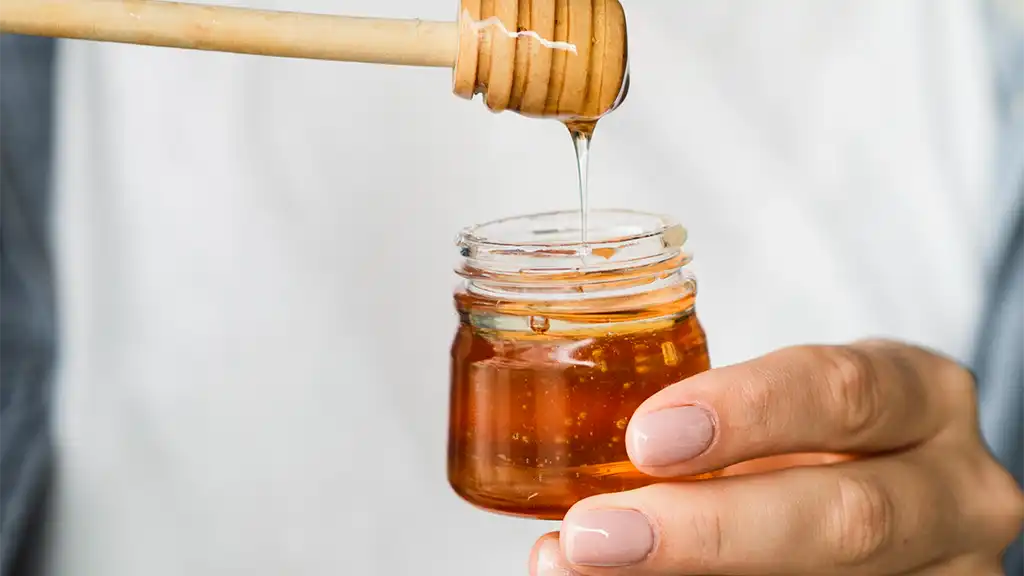
Gentle warming can help restore a more liquid consistency.
However, excessive heating should be avoided.
How to soften crystallized honey
A practical approach is to use a warm-water bath.
- Make sure the honey is in a tightly closed, heat-safe container.
- Place the container in comfortably warm water.
- Allow the honey to warm gradually.
- Stir gently with a clean utensil if appropriate.
- Repeat as necessary until the desired consistency is reached.
Avoid thermal shock, especially when using glass containers.
Do not place unsuitable packaging in hot water.
Why gentle warming matters
High temperatures can affect honey characteristics.
Depending on the temperature and duration of exposure, heating may alter:
- Delicate aroma compounds
- Enzyme activity
- Color
- Flavor
- Certain chemical quality indicators
For premium honey, preserving the original sensory characteristics is often desirable.
Gentle warming is therefore preferable to aggressive heating.
Should you microwave honey?
Microwaving is generally not the preferred approach for carefully softening premium honey.
Microwave heating can be uneven and may create localized hot spots.
A controlled warm-water bath provides a more gradual method.
Will honey crystallize again?
Yes, it may.
Returning honey to a liquid state does not permanently change its underlying sugar composition.
If conditions favor crystallization, crystals can form again during storage.
Key takeaway: Gentle warming can soften crystallized honey, but excessive heat can unnecessarily affect product quality.
7. Honey Crystallization Is Different From Fermentation
Crystallization and fermentation are sometimes confused because both can change honey’s appearance.
However, they are fundamentally different processes.
Crystallization is a physical change involving sugar crystals.
Fermentation is a biological process associated with the activity of microorganisms, particularly certain yeasts.
What causes honey fermentation?
Honey normally has relatively low available water, which helps limit microbial growth.
However, honey with excessive moisture may be more susceptible to fermentation.
Certain yeasts can use available sugars and produce fermentation byproducts.
Possible signs include:
- Unusual sour or alcoholic odors
- Gas formation
- Persistent bubbling
- Pressure buildup
- Noticeable changes in flavor
These symptoms are different from ordinary sugar crystallization.
Why crystallized honey can separate
Some crystallized honey develops a visible liquid layer.
This can occur because glucose crystals separate from the remaining liquid phase.
The liquid portion may have a different composition and moisture concentration.
Separation alone does not prove fermentation.
However, if the liquid phase has sufficiently high available water and suitable yeasts are present, fermentation risk can increase.
What should consumers do?
If honey simply develops crystals but otherwise appears and smells normal, the change may be harmless.
If the product develops suspicious odors, persistent bubbling, pressure, or other signs of spoilage, it should not be consumed.
When in doubt, contact the supplier or discard the product.
Key takeaway: Crystallization is generally normal; fermentation is a separate quality concern.
8. Botanical Origin Influences Crystallization Behavior
Honey’s botanical origin plays an important role in its physical properties.
Bees collect nectar from different flowering plants.
The resulting honey can vary in sugar composition, water content, aroma, color, and other characteristics.
These variations influence crystallization.
Acacia honey
Acacia honey is often valued for its mild flavor and relatively slow crystallization.
Its sugar composition commonly favors longer periods in a liquid state.
However, storage conditions and individual batches can still influence its behavior.
Wildflower honey
Wildflower honey may originate from nectar collected from several plant species.
Its composition can vary considerably between regions and seasons.
Consequently, its crystallization behavior is less predictable without specific product information.
Linden honey
Linden honey is appreciated for its distinctive aroma and botanical identity.
Its crystallization characteristics depend on the individual product and its composition.
Forest honey
Forest honey may include honeydew honey, which differs from typical floral honey in its source materials and composition.
Its crystallization behavior can also differ.
Not all dark or forest-origin honeys behave identically.
Mountain honey
Mountain honey is a geographical description rather than a single botanical category.
It may contain nectar from different flowering plants.
Its texture and crystallization characteristics therefore depend on the actual floral composition.
Key takeaway: Botanical origin helps explain why different honey varieties behave differently during storage.
9. Crystallization Can Be an Advantage Rather Than a Problem
The final essential fact is that crystallization does not always need to be prevented.
Some consumers actively prefer crystallized honey.
A smooth, spreadable consistency can be more convenient than liquid honey for certain foods.
Crystallized honey can also offer a different sensory experience.
Benefits of spreadable honey
Depending on crystal size and consistency, crystallized honey may be convenient for:
- Toast
- Bread
- Breakfast pastries
- Sandwiches
- Certain desserts
- Cheese pairings
- Direct consumption
A thicker consistency may reduce dripping and make portioning easier.
Creamed honey as a commercial product
Controlled crystallization is used to produce smooth, spreadable honey.
This demonstrates that crystallization can be managed as a desirable product characteristic.
For producers and retailers, offering both liquid and creamed honey can provide consumers with additional choices.
Consumer education matters
Many consumers assume that any visible crystal formation indicates poor quality.
Clear product information can correct this misunderstanding.
Retailers can explain that texture changes are natural and that many authentic honeys crystallize.
Such education can reduce unnecessary product returns and improve customer confidence.
Key takeaway: Crystallization can create desirable textures and does not always need to be reversed.
What Is the Science Behind Honey Crystallization?
Honey is a concentrated mixture of sugars and water.
Its high sugar concentration means that the solution may be supersaturated with glucose.
Under suitable conditions, glucose molecules begin forming crystalline structures.
The process involves two broad stages.
Crystal nucleation
Nucleation is the initial formation of tiny crystal structures.
These may develop around existing microscopic particles or other suitable sites.
The presence and characteristics of these initial structures influence subsequent crystallization.
Crystal growth
Once crystals form, additional glucose molecules can join them.
Over time, the crystals may become larger or more numerous.
This changes the overall consistency of the honey.
The process depends on temperature, composition, and storage conditions.
Understanding these stages helps explain why some honey becomes smooth and creamy while other honey develops larger grains.
How Long Does It Take for Honey to Crystallize?
There is no universal crystallization timeline.
Some varieties may begin crystallizing within days or weeks.
Others may remain liquid for months or considerably longer.
The timeline depends on multiple factors.
These include:
- Glucose concentration
- Fructose-to-glucose ratio
- Moisture content
- Temperature
- Botanical origin
- Processing
- Existing crystals
- Storage conditions
A product’s appearance at a particular moment cannot establish its age or authenticity.
For example, a recently harvested honey may crystallize quickly, while an older honey of another variety may remain liquid.
The process is highly product-dependent.
Why Does Honey Turn White?
Honey can appear lighter or more opaque as crystals develop.
Crystals scatter light differently from the surrounding liquid.
This can make honey appear cloudy, pale, or almost white.
The change is often particularly noticeable in varieties that form numerous fine crystals.
A lighter appearance does not automatically mean that the honey has been mixed with sugar or another substance.
However, appearance alone cannot verify product authenticity.
Consumers should evaluate sourcing and quality information rather than relying on color changes.
Why Does Honey Become Hard?
Honey may become firm when a substantial portion of its glucose crystallizes.
As the number and size of crystals increase, the mixture becomes less fluid.
In some cases, the honey may become difficult to scoop or spread.
This is a normal possibility for certain varieties.
Gentle warming can help dissolve crystals and restore a softer consistency.
Alternatively, consumers can enjoy the honey in its crystallized form.
The preferred texture is largely a matter of personal choice.
Why Does Honey Become Grainy?
Graininess results from the presence of sugar crystals large enough to be noticeable during consumption.
The size of these crystals depends on how crystallization begins and develops.
Some conditions encourage many small crystals.
Others allow fewer crystals to grow larger.
Large crystals can create a coarse texture.
This does not automatically indicate adulteration or contamination.
Controlled crystallization techniques can produce a finer, more uniform consistency.
Why Is My Honey Crystallizing at the Bottom?
Crystallization may begin in one area of a container before spreading.
Existing crystals, local temperature differences, and other conditions can influence where crystal formation becomes visible.
The bottom of a jar may develop a thicker crystalline layer while the upper portion remains more liquid.
This uneven appearance can be normal.
However, visible separation should be evaluated alongside the product’s odor, storage history, and overall condition.
Unusual fermentation symptoms should not be dismissed as ordinary crystallization.
Why Does Some Honey Never Seem to Crystallize?
Certain honey varieties have compositions that strongly favor remaining liquid.
A relatively high fructose-to-glucose ratio can slow crystal formation.
Processing and storage conditions may also influence the process.
However, the absence of visible crystals does not mean that crystallization is impossible.
A product may eventually develop crystals if conditions change.
It is therefore inaccurate to claim that every authentic honey must crystallize within a specific period.
Can Honey Crystallize in the Refrigerator?
Yes.
Refrigeration can change honey’s viscosity and crystallization behavior.
Depending on the temperature and the honey’s composition, cool storage may encourage crystallization or affect crystal growth.
Ordinary honey generally does not require refrigeration.
For most consumers, a suitable room-temperature storage location is more convenient.
However, storage instructions from the manufacturer should take priority.
Does Honey Crystallization Affect Taste?
Crystallization primarily changes texture.
However, texture can influence how consumers perceive flavor.
A smooth liquid honey and a firm crystallized honey may create different sensations in the mouth.
The underlying botanical flavor characteristics generally remain recognizable.
Nevertheless, storage conditions and prolonged heat exposure can influence aroma and other quality attributes independently of crystallization.
Consumers should distinguish between changes caused by crystal formation and changes caused by inappropriate storage.
Does Crystallization Reduce Honey’s Nutritional Value?
Crystallization itself is mainly a physical transformation.
It does not automatically remove the sugars or minor naturally occurring components present in honey.
However, honey’s composition and quality can be influenced by other factors, including prolonged heating and storage.
Consumers should not assume that crystallized honey has lost its nutritional value.
Equally, crystallization does not make honey more nutritious.
Honey remains predominantly a source of sugars regardless of texture.
Is Crystallized Honey Safe to Eat?
Properly stored crystallized honey is generally safe to consume if it has not developed signs of spoilage or contamination.
Crystallization alone is not a safety concern.
However, consumers should examine the product if it has been stored improperly or displays unusual changes.
Potential warning signs include persistent bubbling, sour or alcoholic odors, leakage, or other evidence of fermentation.
Honey should never be given to infants younger than 12 months because of the risk of infant botulism.
This warning applies whether the honey is liquid or crystallized.
Can Crystallized Honey Be Used in Tea?
Yes.
Crystallized honey can be stirred into comfortably warm tea.
The crystals gradually dissolve as the honey mixes with the liquid.
There is no requirement to restore the entire jar to a liquid state before use.
Consumers can simply take the desired amount.
Honey contributes sweetness and flavor, but it should still be consumed in moderation because of its sugar content.
Can Crystallized Honey Be Used for Baking?
Yes.
Crystallized honey can be used in many recipes that call for honey.
Depending on the recipe, gentle warming may make measuring and mixing easier.
In other cases, the crystals will dissolve during preparation.
Honey’s sugar content, moisture contribution, and flavor remain important considerations in baking.
Substituting honey for other sweeteners may require recipe adjustments.
Honey Crystallization vs Sugar Adulteration
Some consumers assume that visible crystals indicate added table sugar.
This is incorrect.
Glucose crystallization occurs naturally in many genuine honeys.
However, adulterated products can also show physical changes.
Crystallization cannot reliably distinguish authentic honey from adulterated mixtures.
Professional verification may involve laboratory methods and supply-chain documentation.
The exact analytical approach depends on the suspected type of adulteration.
For commercial buyers, traceability and supplier reliability are especially important.
How to Prevent Unwanted Honey Crystallization
Completely preventing crystallization is not always realistic.
The process is influenced by the honey’s natural composition.
However, appropriate storage can help manage texture changes.
Practical recommendations include:
- Keep containers properly closed.
- Follow manufacturer storage instructions.
- Avoid unnecessary temperature fluctuations.
- Protect honey from excessive heat.
- Avoid direct sunlight.
- Use clean utensils.
- Do not introduce water into the container.
These practices support general product quality.
They do not guarantee that every variety will remain liquid.
For commercial operations, controlled processing and storage may be used to manage crystallization, subject to the desired product characteristics.
How to Store Honey in Warm Climates
Warm climates create particular challenges for honey storage.
In Qatar and other Gulf countries, ambient temperatures can become very high.
Consumers should avoid exposing honey to prolonged excessive heat.
Suitable indoor storage away from direct sunlight is generally preferable.
A hot vehicle, sunny windowsill, or poorly controlled storage area may expose honey to conditions that affect its quality.
For retailers and distributors, temperature management during warehousing and transportation deserves particular attention.
Preserving product quality is more important than maintaining a particular appearance at all costs.
Honey Crystallization in Premium European Honey
European honey comes from diverse botanical and geographical environments.
Different regions produce honey with different sugar profiles and crystallization characteristics.
For example, acacia honey is often associated with slower crystallization, while some other floral varieties crystallize more readily.
This diversity reflects natural differences rather than a universal quality ranking.
Premium European honey should be evaluated through origin, authenticity, product characteristics, handling, and traceability.
Crystallization should be understood as one possible natural feature.
Honey Crystallization in Bosnian Honey
Bosnia and Herzegovina offers diverse environments for honey production.
Mountains, forests, meadows, valleys, and different flowering plants create opportunities for varied honey types.
Depending on botanical composition, Bosnian honey may crystallize at different rates.
Some varieties may remain liquid for relatively long periods.
Others may develop crystals sooner.
This variation is not automatically a sign of inconsistent quality.
It can reflect differences in nectar sources, harvest conditions, and natural sugar composition.
For consumers interested in premium Bosnian honey, understanding crystallization helps establish realistic expectations about product texture.
Why Bosnian Honey Offers Distinctive Characteristics
Bosnia and Herzegovina has an established beekeeping tradition and varied natural landscapes.
These conditions contribute to the country’s honey-producing identity.
Different regions may offer different botanical sources and seasonal flowering patterns.
For international consumers, Bosnian honey provides a recognizable European origin.
However, geographical origin alone does not establish superior quality or specific health benefits.
The value of an individual product depends on its authenticity, sourcing, handling, and sensory characteristics.
Transparent product information is therefore essential.
BeeJapa and Premium Bosnian Honey
BeeJapa focuses on presenting premium Bosnian honey and bee-based products to international markets.
The brand draws its identity from Bosnia and Herzegovina, a European country with mountains, forests, meadows, valleys, diverse flowering vegetation, and established beekeeping traditions.
For consumers exploring premium honey, understanding natural texture changes is an important part of informed purchasing.
Honey may crystallize depending on its botanical composition and storage conditions.
This process does not automatically indicate reduced quality.
BeeJapa’s premium positioning can emphasize authentic geographical origin, product transparency, distinctive flavor, and responsible consumer education.
Explaining natural characteristics helps customers appreciate honey as an agricultural product rather than expecting every jar to remain visually identical indefinitely.
Why Retailers Should Explain Crystallization
Retailers selling premium honey may encounter customers who are unfamiliar with natural crystal formation.
Without clear information, some consumers may assume that a cloudy or grainy product is defective.
This can lead to unnecessary complaints or returns.
Retailers can reduce confusion by explaining:
- Why honey crystallizes
- Why different varieties behave differently
- Whether crystallized honey can be consumed
- How to soften honey gently
- Why crystallization does not prove authenticity
Accurate education supports customer confidence.
It also helps distinguish normal product variation from genuine quality concerns.
Crystallization and International Honey Exports
International honey shipments may involve changes in temperature and extended storage periods.
These conditions can influence crystallization.
Importers and distributors should therefore understand the expected characteristics of the honey they purchase.
Commercial specifications may address:
- Botanical variety
- Expected texture
- Moisture content
- Packaging format
- Storage requirements
- Product appearance
- Shelf-life considerations
- Handling instructions
A supplier should communicate realistic expectations.
For example, a product that naturally crystallizes relatively quickly should not be marketed with an unconditional promise that it will remain liquid indefinitely.
Crystallization and Product Presentation
Visual appearance influences consumer purchasing decisions.
Many customers associate clear, liquid honey with freshness.
However, this association is not universally accurate.
Crystallized honey can be genuine and suitable for consumption.
Premium brands can use packaging information and product descriptions to explain natural texture changes.
Some may also offer deliberately creamed honey as a separate product format.
The objective should be transparent presentation rather than creating unrealistic expectations.
Common Honey Crystallization Myths
Several misconceptions continue to circulate.
Myth: Crystallized honey is spoiled.
Crystallization alone does not indicate spoilage. It is usually a natural physical process.
Myth: Only genuine honey crystallizes.
Crystallization cannot reliably establish authenticity.
Myth: Real honey must crystallize quickly.
Different authentic varieties crystallize at different rates.
Myth: Crystallized honey loses all its benefits.
Crystal formation does not automatically remove honey’s naturally occurring components.
Myth: Honey must be boiled to become liquid again.
Gentle warming is preferable to excessive heating.
Myth: Crystallized honey cannot be used in cooking.
It can generally be used in cooking and baking, subject to recipe requirements.
Myth: Expensive honey never crystallizes.
Price does not determine whether a honey variety will form crystals.
Understanding these facts helps consumers evaluate honey more accurately.
Why Consumer Education Matters for Premium Honey
Honey is a natural agricultural product.
Its characteristics can vary between botanical sources, harvests, and geographical regions.
Consumers who understand these variations are better prepared to evaluate quality.
They are also less likely to confuse normal texture changes with defects.
For premium honey brands, education can support long-term trust.
Clear explanations of origin, crystallization, storage, and authenticity provide more meaningful value than exaggerated marketing promises.
This approach is particularly relevant for international brands introducing honey from distinctive regions such as Bosnia and Herzegovina.
Conclusion
Honey crystallization is a natural process influenced by glucose concentration, fructose balance, botanical origin, temperature, moisture, and storage conditions. Although it changes honey’s texture and appearance, it does not automatically indicate spoilage, adulteration, or reduced quality.
The nine essential facts explored in this guide explain why honey crystallizes, how natural sugar composition affects the process, why storage temperature matters, how different crystal textures develop, and why crystallization cannot reliably prove authenticity.
They also demonstrate that crystallized honey can often be gently softened, that crystallization differs from fermentation, that botanical origin influences texture, and that crystallization can sometimes be a desirable characteristic.
Consumers should remember that authentic honey does not need to remain permanently liquid. Some varieties crystallize quickly, while others remain liquid for much longer.
For those interested in premium European honey, Bosnia and Herzegovina offers a distinctive geographical origin associated with varied landscapes, flowering vegetation, and established beekeeping traditions.
BeeJapa presents this Bosnian identity through premium honey and bee-based products for international markets.
Ultimately, understanding honey crystallization helps consumers make informed choices, store products appropriately, and appreciate the natural diversity of genuine honey.
FAQ
What is honey crystallization?
Honey crystallization is a natural physical process in which some of the dissolved glucose forms solid crystals. It changes the texture and appearance of honey without automatically indicating spoilage or poor quality.
Why does honey crystallize?
Honey crystallizes because its concentrated sugar solution can become supersaturated with glucose. Botanical origin, sugar composition, moisture content, temperature, and storage conditions influence the process.
Is crystallized honey safe to eat?
Properly stored crystallized honey is generally safe to consume if there are no signs of spoilage or contamination. Crystallization alone is not a safety concern. Honey must never be given to infants younger than 12 months.
Does honey crystallization mean the honey is real?
No. Many genuine honeys crystallize, but crystallization is not a reliable authenticity test. Some authentic varieties remain liquid for extended periods, and certain adulterated products may also form crystals.
How can I turn crystallized honey back into liquid?
Place a tightly closed, heat-safe container in a warm-water bath and allow the honey to soften gradually. Avoid excessive heat and thermal shock, especially with glass containers.
Why does some honey crystallize faster than others?
Different honey varieties contain different proportions of glucose and fructose. Honey with relatively higher glucose concentrations often crystallizes more quickly, although temperature and other factors also matter.
Does crystallized honey lose its nutritional value?
Crystallization itself does not automatically remove honey’s nutritional components. It mainly changes texture. However, honey remains predominantly a source of sugars regardless of whether it is liquid or crystallized.
Should honey be refrigerated to prevent crystallization?
Refrigeration is generally unnecessary for ordinary shelf-stable honey and may influence crystallization. Follow the product’s storage instructions and avoid excessive heat or direct sunlight.
Why does Bosnian honey crystallize?
Bosnian honey can crystallize because of its natural sugar composition and storage conditions, just like honey from other geographical origins. The rate depends on botanical sources and the characteristics of the individual batch.
Can crystallized honey be used in tea or baking?
Yes. Crystallized honey can generally be stirred into warm beverages or used in baking. Gentle warming may make measuring and mixing easier when a liquid consistency is preferred.